Dover to Calais Ferry from £83: Prices, Times & Best Options (2026)

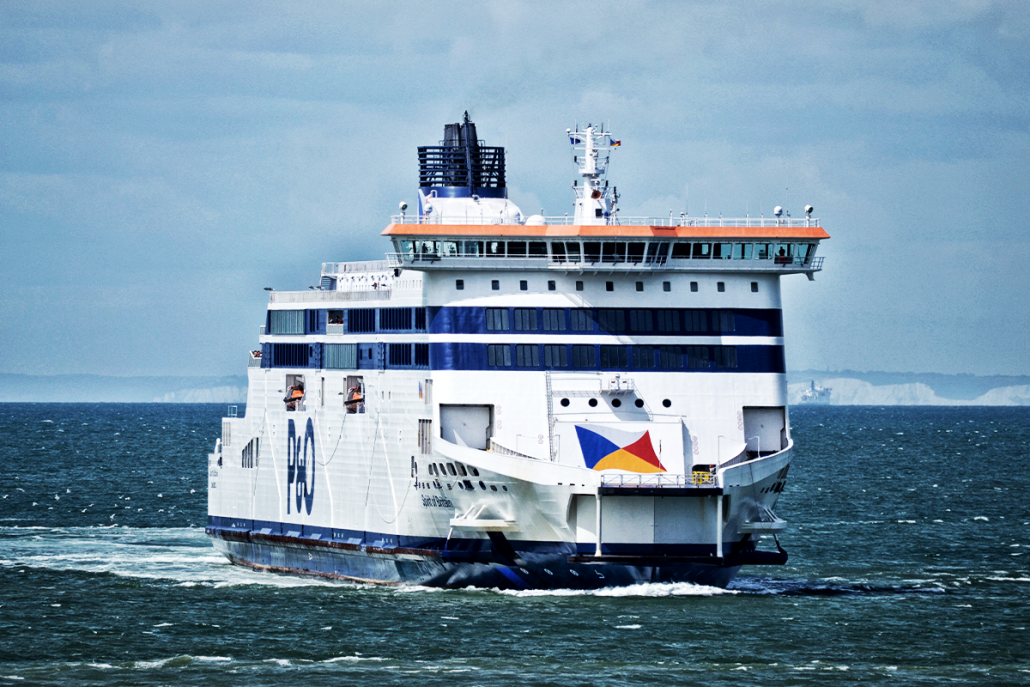
Car Ferry arriving at Dover UK with the wight cliffs of dover in the backgroundDover to Calais Ferry from £83: Prices, Times & Best Options (2026)

Planning a trip to Europe this summer? Skip the airport queues and take the car instead.

The Dover to Calais ferry is the UK’s most popular route to France, taking around 90 minutes, with prices from £83 and 40+ sailings per day.

Prices and schedules updated for 2026 travel.

Search Prices & Offers »


Car Ferry arriving at Dover UK with the wight cliffs of dover in the background

Car Ferry arriving at the Port of Dover.

Compare Dover - Calais & Dunkirk Ferry Prices

Dover to Calais Ferry: Quick Summary

  • Crossing time: ~90 minutes
  • Price: from £83 (typically £120–£160 daytime)
  • Operators: DFDS, P&O Ferries, Irish Ferries
  • Frequency: 40+ sailings per day
  • Best for: the cheapest and most flexible route to France

Why Choose the Dover to Calais Ferry?

It’s the shortest crossing between England and France, and the most frequent. Whether you’re taking a family holiday, a city break, or driving down through Europe, this route is hard to beat.

  • Crossing time: around 90 minutes
  • Frequency: 40+ sailings per day, around the clock
  • Three competing operators which keep prices competitive
  • Take your car, van or motorhome, no luggage limits or airline-style fees
  • Built for volume: Dover handles millions of passengers a year with dedicated lanes and roll-on/roll-off boarding

If you want a no-fuss crossing with the flexibility to travel at your own pace, this is the route.

Search Prices & Offers »

Why Choose the Dover to Calais Ferry?

It’s the shortest crossing between England and France, and the most frequent. Whether you’re taking a family holiday, a city break, or driving down through Europe, this route is hard to beat.

  • Crossing time: around 90 minutes
  • Frequency: 40+ sailings per day, around the clock
  • Three competing operators which keep prices competitive
  • Take your car, van or motorhome, no luggage limits or airline-style fees
  • Built for volume: Dover handles millions of passengers a year with dedicated lanes and roll-on/roll-off boarding

If you want a no-fuss crossing with the flexibility to travel at your own pace, this is the route.

Dover to Calais Ferry Prices in 2026

Fares start at around £83 one way for a car and passengers, typically on late-night or very early-morning sailings.

For most travellers, expect to pay:

  • £105–£200 one way, depending on time, operator, and how far in advance you book
  • Peak-summer sailings are similarly priced, but flexible tickets sell out fast. Book early if you’re travelling in July or August

Tip: Economy tickets (available with DFDS) let you travel up to 4 hours either side of your booked departure, subject to availability. Useful if your plans might change, or you just want the option to leave earlier.

In short, most travellers pay around £120–£160 one way for a standard daytime crossing.

Sailing Times & Ferry Operators

Three operators run the Dover to Calais route:

Operator First Sailing Last Sailing
DFDS ~01:00 ~23:30
P&O Ferries ~01:00 23:55
Irish Ferries 00:20 ~22:45

The route effectively runs 24 hours a day. All three operators take around 90 minutes; there’s no meaningful difference in crossing time between them. In practice, the choice usually comes down to price and departure time; all three offer a similar crossing experience.

Search Prices & Offers »

Dover to Calais Ferry FAQs

Do Operators Charge Different Prices?

Yes, but usually by £10–£30 on the same day, depending on timing and availability.

  • Cheapest: very early morning and late-night sailings
  • Most expensive: peak-hour departures on Friday afternoons and Sunday evenings in summer

Shopping across all three operators, rather than going directly to one, is the easiest way to find the best fare for your travel dates.

What’s included (and what costs extra)?

Standard fares cover the car and all passengers. Extras vary by operator:

  • Priority boarding  first on, first off (worth it in peak season)
  • Premium lounges with food and drink included

Foot passenger travel: currently, P&O Ferries is the main option on this route; pre-booking is essential as places are limited

Where is the ferry terminal at Dover?

The Port of Dover ferry terminal is located just off the A20 in Dover. By car, follow the boat signs to the ‘Eastern Docks’ – all three operators, P&O, DFDS and Irish Ferries, are found here. Use postcode CT16 1HZ for your sat nav. For foot passengers arriving by public transport, Dover Priory train station is just over 1 mile from the port.

Port of Dover – View Larger Map

Where is the ferry terminal at Calais?

The Calais ferry terminal (Port Boulogne) can be found just outside of Calais on the N216. From the main A16/E40 motorway, looks for the green signs to ‘Calais Port – Car Ferry’. Again, all three ferry operators can be found here. The entrance for foot passengers is by the ‘Cousteau’ bus stop and the free Balad’in shuttle bus runs from the centre of Calais to here roughly every 12-20 minutes.

Port of Calais – View Larger Map

How early should I arrive at Dover?

Check in times vary, from 45 minutes up to 90 minutes before the sailing. Check with your ferry operator for their specific minimum arrival time at the port.

  • Vehicles: arrive 60–90 minutes before departure
  • Check-in typically closes 45–60 minutes before sailing
  • In peak summer, give yourself extra time; the port can get busy

What are the duty-free allowances when travelling between England and France?

Personal allowances for alcohol and tobacco when travelling to mainland Europe are much lower than they used to be when the UK was a member of the European Union. According to the UK Government website, you are currently allowed to bring the following into the UK without paying import VAT or duty:

  • 200 cigarettes or 250g tobacco
  • 18 litres of wine (24 bottles)
  • 42 litres of beer

How long is the crossing from Dover to Calais?

Around 90–100 minutes, depending on the operator and conditions.

Which ferry companies sail from Dover to Calais?

DFDS, P&O Ferries, and Irish Ferries all operate this route.

Can I travel as a foot passenger?

Yes. P&O Ferries is currently the main foot passenger option on this route. You must pre-book; spaces are limited, and walk-up travel isn’t guaranteed.

Do I need a passport?

Yes. All passengers (including children) must carry a valid passport. EU ID cards are not accepted for UK residents.

Can I bring my pet?

Yes, all three operators allow pets, but the paperwork has changed since Brexit. GB-issued pet passports are no longer valid. You now need an Animal Health Certificate (AHC), issued by an Official Veterinarian within 10 days of your departure date. Your pet must also be microchipped and have a valid rabies vaccination administered at least 21 days before travel. Check requirements with your vet well in advance. 

What’s on board the ferries?

Restaurants and cafés, lounges, free Wi-Fi, outdoor decks, and duty-free shopping. Premium lounges are available on most vessels for an extra fee.

Is there parking at Dover?

Yes, Dover has both short- and long-stay car parks, plus several independent providers nearby which are often cheaper. Book in advance during the summer.

What documents do I need for my car?

  • Valid driving licence
  • Car insurance documents
  • V5C logbook (or a letter of authorisation if you don’t own the vehicle)
  • Headlamp beam deflectors and a reflective jacket are legally required in France

Why consider Dunkirk (Dunkerque)?

  • Often less congested during peak periods
  • Better positioned if you’re heading east, Bruges is around an hour away
  • Can be a useful alternative when Calais sailings are heavily booked

For most travellers, Calais is the better choice, with more departures, more operators, and usually cheaper. But Dunkirk is a useful fallback if Calais sailings are busy or prices spike.

Where is the ferry terminal at Dunkirk (Dunkerque)?

The DFDS terminal is located just to the West of Dunkirk. The address is Terminal Car Ferry, Port 5670, Rte de la Maison Blanche, 59279 Loon-Plage, France. There are white ‘Car Ferry’ signs on the exit from the main A16/E40 motorway.

DFDS Dunkirk Ferry Terminal – View Larger Map

Ferry vs Eurotunnel at a glance

  • Ferry: cheaper, more flexible, 90 mins
  • Eurotunnel: faster (35 mins), more expensive
  • Best choice: ferry for most travellers, especially with cars and families

Both get you across the Channel, but they’re quite different experiences.

Ferry Eurotunnel
Crossing time ~90 minutes ~35 minutes
Price Usually cheaper Usually more expensive
Operators 3 (more deals) 1
Onboard experience Walk around, restaurants, sea views Stay in your car
Frequency 40+ per day ~22 per day

The Eurotunnel is genuinely fast; you’re travelling under the sea at around 200 km/h, and if you’ve never done it, it’s worth experiencing once. But for value, flexibility, and the onboard experience (especially with kids or on a longer trip), the ferry wins for most people. If you’re travelling with kids, pets or a packed car, the ferry is usually the easier and more comfortable option.

Other Ferry Routes to France

Although the Dover to Calais and Dunkirk routes are the most popular and busiest, there are many other ferry routes between southern England and France. Depending on your destination, these routes can be quicker and more convenient, and make for a more relaxing journey.

  • Portsmouth to Caen
  • Portsmouth to Cherbourg
  • Plymouth to Roscoff
  • Newhaven to Dieppe
  • Portsmouth to St Malo
  • Poole to Cherbourg

Quickly compare prices and offers on these and alternative routings to see how much you can save!

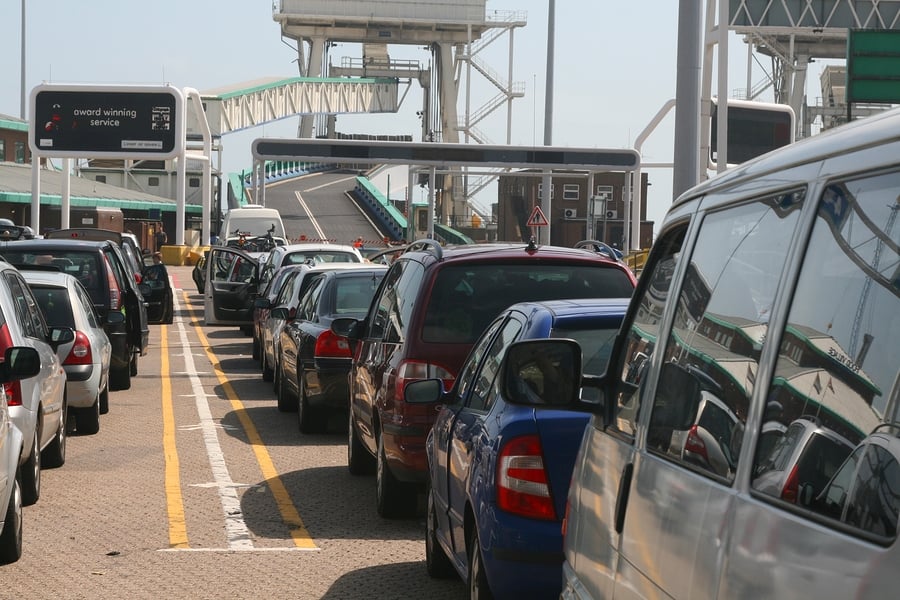
Cars waiting to board a ferryOther Ferry Routes to France

Although the Dover to Calais and Dunkirk routes are the most popular, and busy, there are many other alternative ferry routes between the South of England and France. Depending on your destination, these routes can be quicker, more convenient and make for a more relaxing journey.

  • Portsmouth to Caen
  • Portsmouth to Cherbourg
  • Plymouth to Roscoff
  • Newhaven to Dieppe
  • Portsmouth to St Malo

Quickly compare prices and offers on these and alternative routings to see how much you can save!

Auto's staan in de rij te wachten om aan boord te gaan van een veerboot voor de overtocht naar Engeland.

Driving in France? – Know the Requirements

It’s a legal requirement in France and many other European countries to carry a number of items of safety equipment in your car with you. There can be very hefty fines (sometimes on the spot) if you’re stopped by the Police and you don’t have these items in your car.

  • Reflective jackets for the driver and all passengers. These should be accessible from inside the vehicle.
  • Red warning triangle
  • Registration plate country identifier
  • Headlamp beam deflectors
  • Spare bulb kit – this is recommended rather than mandatory
  • First aid kit – again, a recommendation

Driving in France? – Know the Requirements

Woman wearing reflective jacket and red triangle on the road following a car breakdown

In France, it is a legal requirement to have reflective jackets and other items of safety equipment in your car.

It’s a legal requirement in France and many other European countries to carry a number of items of safety equipment in your car with you. There can be very hefty fines (sometimes on the spot) if you’re stopped by the Police and you don’t have these items in your car.

  • Reflective jackets for the driver and all passengers. These should be accessible from inside the vehicle.
  • Red warning triangle
  • Registration plate country identifier
  • Headlamp beam deflectors
  • Spare bulb kit – this is recommended rather than mandatory
  • First aid kit – again, a recommendation
Woman wearing reflective jacket and red triangle on the road following a car breakdown

A breakdown is inconvenient at the best of times and could be a nightmare if you’re stuck at the side of the road in a foreign country.